As the manager of a remote team, you’ve probably felt that nagging feeling that something is missing. Your team is shipping work, hitting deadlines, and showing up to calls. But do they actually feel connected? Do they enjoy logging on for work?
For too many remote teams, the honest answer is: not really.
In Buffer’s 2023 State of Remote Work, 23% of workers reported struggling with loneliness. Without hallway chats, spontaneous lunches, and the shared energy of a physical office, remote work can easily start to feel transactional. That’s when morale slips, creativity stalls, and your best people start quietly looking for somewhere that feels more meaningful.
But here’s the thing: remote work doesn't have to feel disconnected. It can be collaborative, energizing, and genuinely fun! But that won't happen on its own; you have to build that type of culture intentionally.
The good news? There are tools designed specifically to help you do exactly that.
The Best Tools to Improve Remote Team Culture:
Donut for Slack: Random Pairings That Build Real Relationships
HeyTaco: Turn Recognition Into a Team Ritual
Lattice: Make Engagement Something You Actually Measure
Officevibe by Workleap: Pulse Surveys Without the HR Overhead
Miro: Where Your Team's Best Ideas Come to Life
Slido: Give Everyone a Voice in Meetings
Gather: A Virtual Workspace Where Your Team Actually Wants to Show Up
Traditional tools like Slack and Zoom were built for communication, not culture. This list of apps picks up where the big platforms leave off, helping your team go from “coworkers on a grid” to “people who actually enjoy working together.”
Donut for Slack: Random Pairings That Build Real Relationships
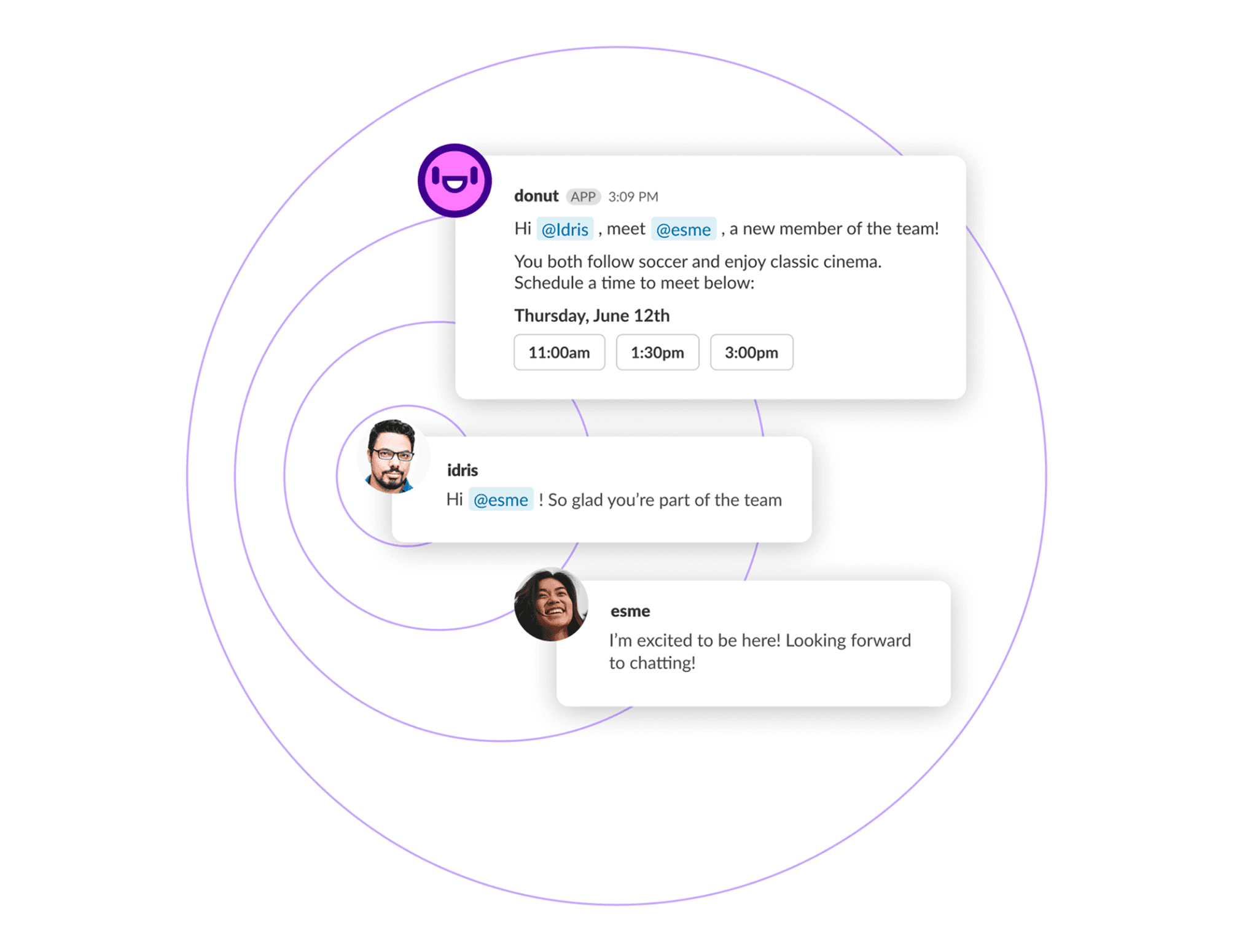
Some of the best work friendships start with a random conversation: Sitting next to someone new at a company event or crossing paths in the breakroom. On a remote team, those moments don't happen naturally. Donut creates them on purpose.
Donut integrates directly into Slack and automatically pairs teammates for casual 1:1 coffee chats. It handles the scheduling nudge, so no one has to awkwardly reach out first. You can customize the pairing frequency, create themed intros (new hire welcomes, cross-functional connections, interest-based groups), and even run icebreaker prompts to spark conversation.
What makes it work for culture: Donut helps build the cross-functional friendships that don't happen organically on remote teams. The engineer who's never talked to anyone in marketing. The new hire who only knows their immediate team. Over time, these small connections add up to a team that actually knows each other, and that changes everything about how they work together.
Best for: Teams that want low-effort, high-impact relationship building baked right into their existing Slack workflow.
HeyTaco: Turn Recognition Into a Team Ritual
Feeling seen at work is one of the strongest drivers of engagement and retention. And on remote teams, recognition has to be intentional. You can't catch someone doing great work in passing and give them a quick shoutout in the hallway. You have to create spaces for it.
HeyTaco makes peer-to-peer recognition fun. Inside Slack, teammates give each other "tacos" for great work, helpful moments, and everyday wins. It's lightweight, genuinely delightful, and it becomes a ritual your team looks forward to. (The leaderboard doesn't hurt either.)
What makes it work for culture: Top-down recognition matters, but peer recognition hits differently. When your teammates celebrate you (not just your manager), it creates a sense of belonging that's hard to replicate any other way. Gather's own team uses HeyTaco, and it's become one of our favorite parts of the workday.
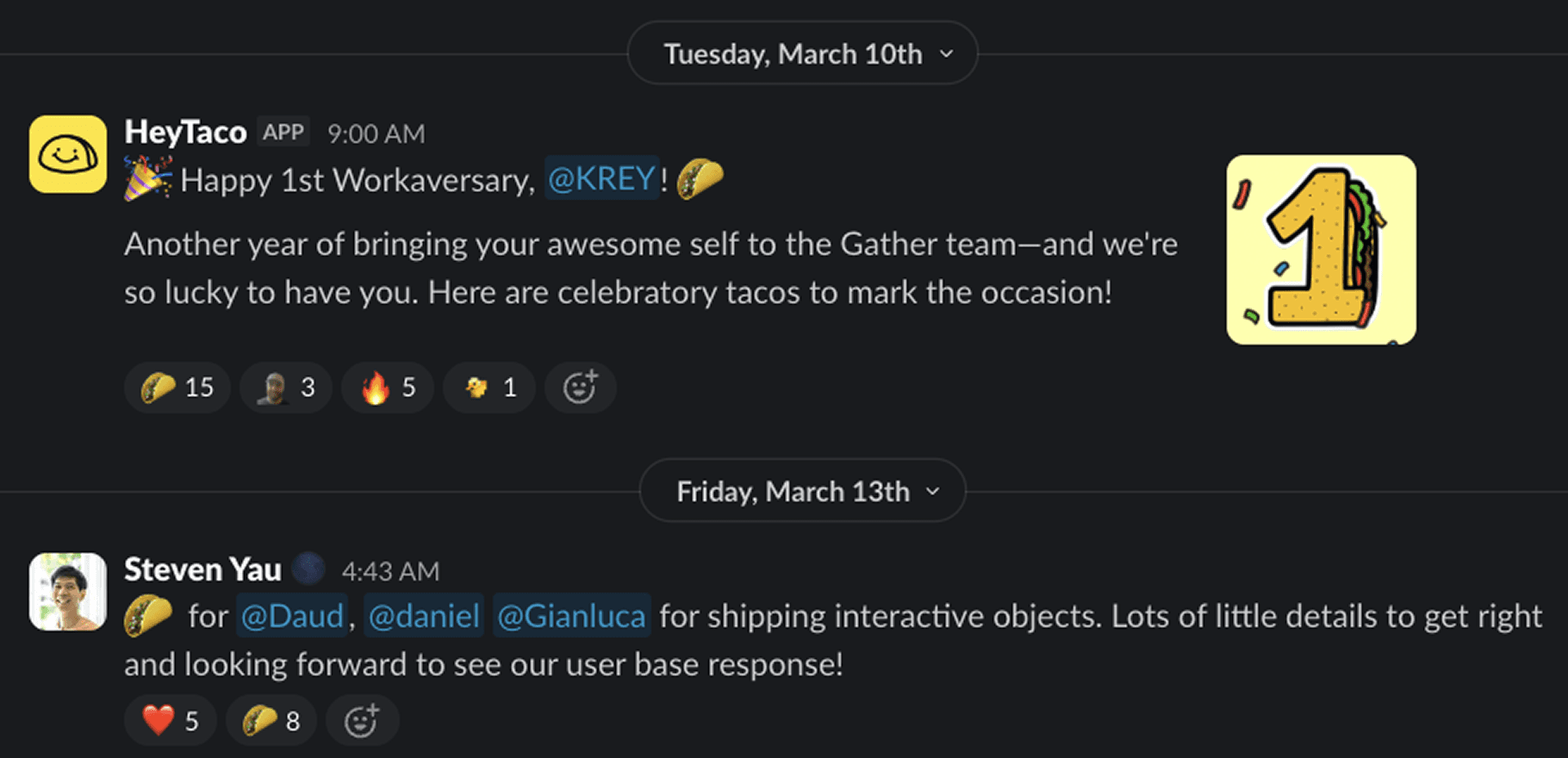
A screenshot of Gather’s #praise channel in Slack, where we use HeyTaco to give recognition and celebrate each other.
Best for: Teams already in Slack who want a fun, low-friction way to build a culture of appreciation.
Lattice: Make Engagement Something You Actually Measure
You can't improve your team's culture if you don't know how they're actually feeling. And on a remote team, the signals are easy to miss. Someone who's checked out might look just like someone who's heads-down focused — until the moment they put in their notice.
Lattice is an HR platform that gives managers and people teams the tools to stay close to what's really happening. Engagement surveys, pulse checks, structured 1:1s, and performance reviews all live in one place. More importantly, Lattice helps you do something with what you learn. Its goal-tracking and action-planning features turn survey insights into actual next steps.
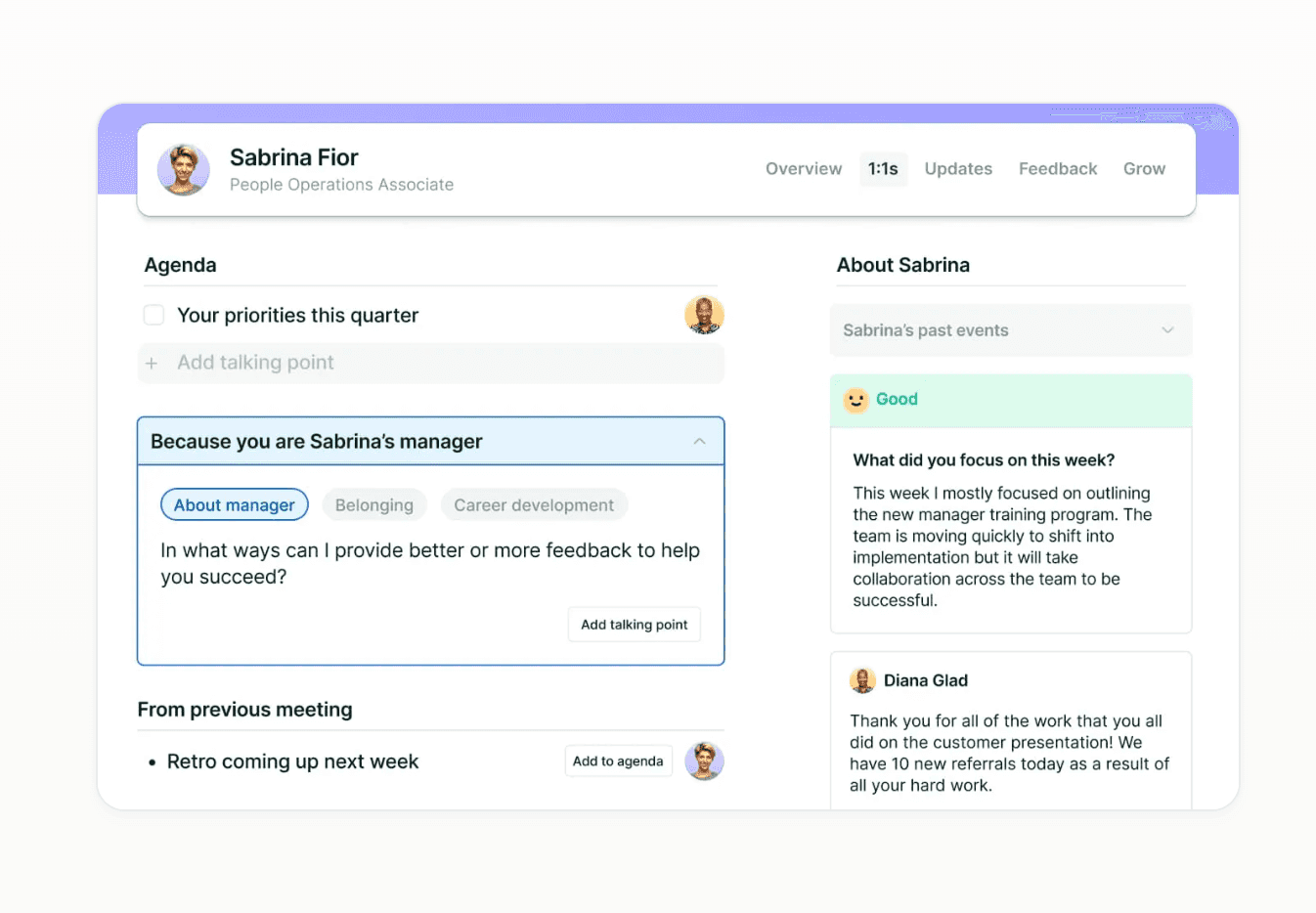
What makes it work for culture: Engagement and retention aren’t really about the superficial perks. The teams that build strong remote cultures are the ones that listen and respond. Lattice gives you the system to do that at scale.
Best for: People managers and HR teams at growing companies who want to build a feedback loop that actually drives change.
Officevibe by Workleap: Pulse Surveys Without the HR Overhead
Not every team needs a full HR platform, and not every manager wants to wait for a quarterly engagement report to find out their team is struggling. Officevibe is built for the team lead who wants to stay plugged in without a lot of overhead.
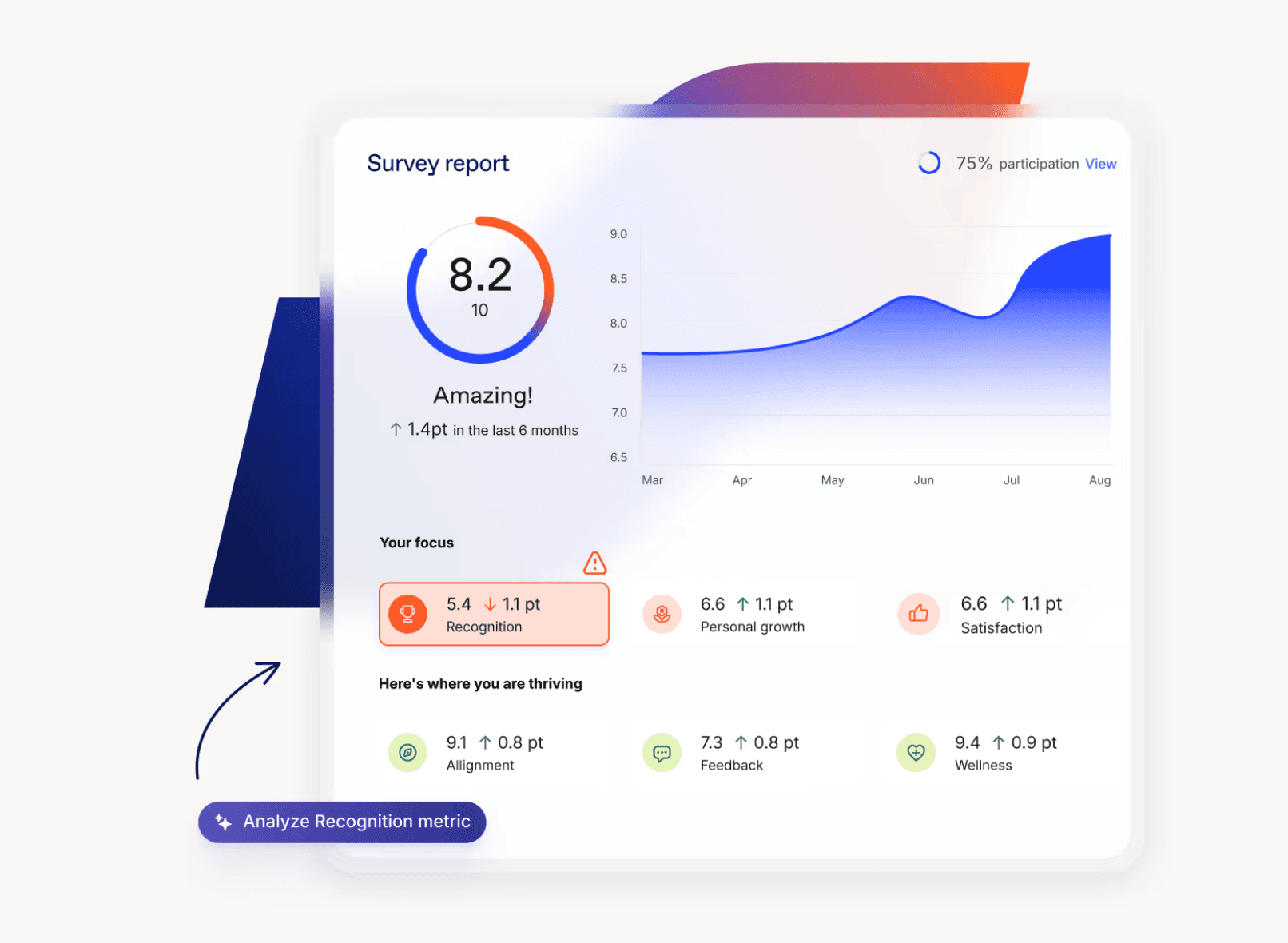
It sends short, science-backed pulse surveys to your team on a regular cadence and surfaces the results in a clean manager dashboard. The anonymous feedback feature is especially powerful — it gives people a safe space to share what they're really thinking, which often leads to the most useful insights. When something comes up, Officevibe even suggests conversation starters so managers know how to follow up.
What makes it work for culture: Officevibe lowers the barrier between "something feels off on my team" and "I know exactly what to do about it." Culture problems get harder to fix the longer they go unaddressed, but Officevibe gives managers answers faster.
Best for: Team leads who want real-time culture insights without a full HR suite.
Miro: Where Your Team's Best Ideas Come to Life
Collaboration is bonding. There's something about working through a problem together that creates a shared energy you just can't replicate by sending files back and forth. Building on each other's ideas, riffing in real time, landing on something none of you could have gotten to alone…it’s exciting!
Miro is a virtual whiteboard that brings that same energy online. It's built for brainstorming sessions, retros, project planning, and any time your team needs to think together in a shared visual space. The interface is intuitive enough that non-designers love it, and powerful enough for complex workshops.
Plus there's the Miroverse, a library of community-built templates for facilitated exercises. Stinky Fish (a fun way to surface hidden team anxieties), Appreciation Circle (a structured way to recognize teammates), or Team Health Checks (retro to discover better ways to work together) are the kinds of sessions your team will actually enjoy.
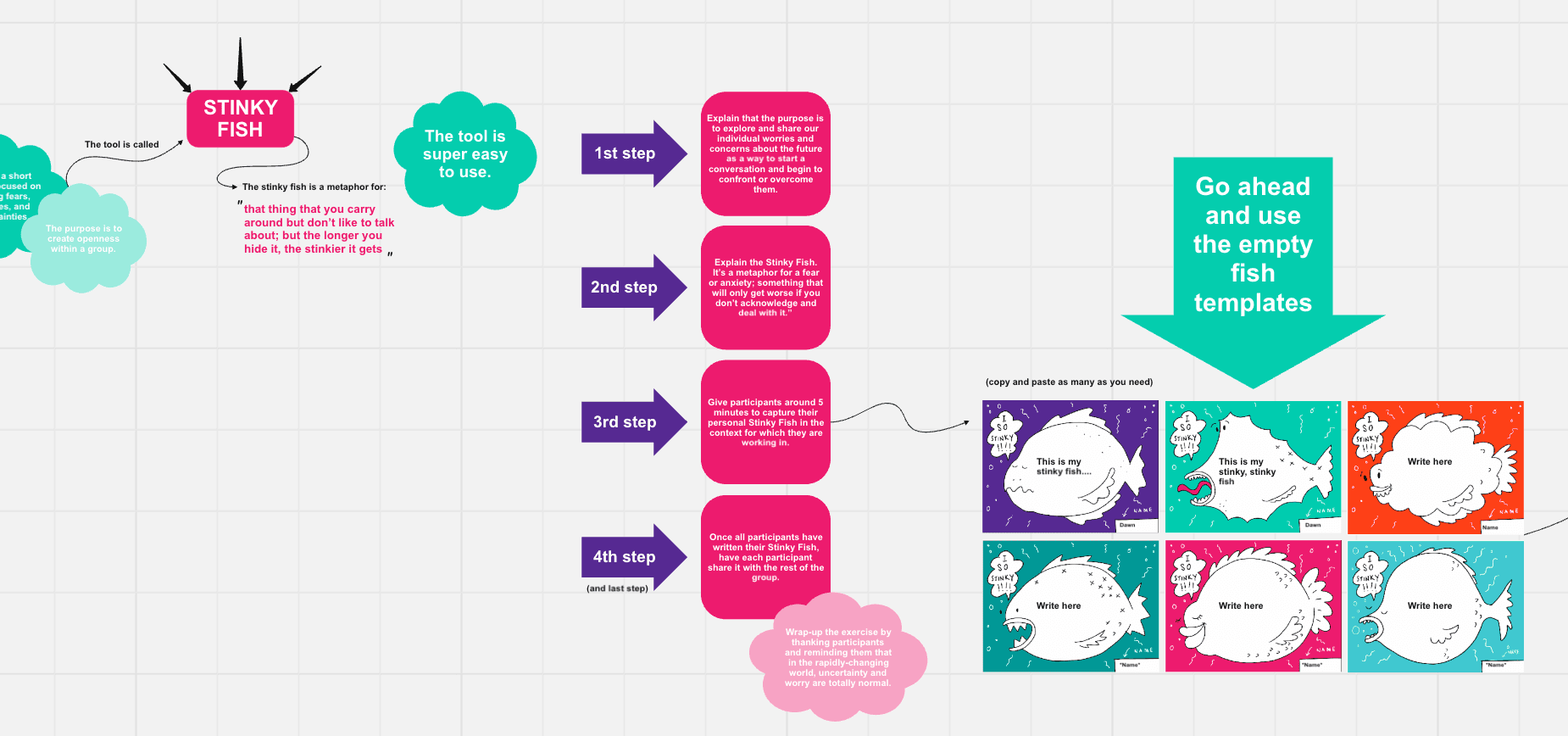
What makes it work for culture: Remote brainstorming in a Google Doc gets the job done. Brainstorming in Miro is fun. That difference matters more than it sounds.
Best for: Design, product, marketing, and cross-functional teams that need a shared creative space.
Slido: Give Everyone a Voice in Meetings
In any team meeting, it's easy for the same few voices to dominate. The quiet thinkers, the introverts, the people in a tricky time zone who joined the call at midnight: they often have the best insights, but the video call format doesn't make it easy to share them.
Slido fixes that. It lets you run live polls, Q&A sessions, word clouds, and anonymous feedback forms inside your meetings. Employees can ask questions or share thoughts in real time (even anonymously) without interrupting or waiting for the right moment.
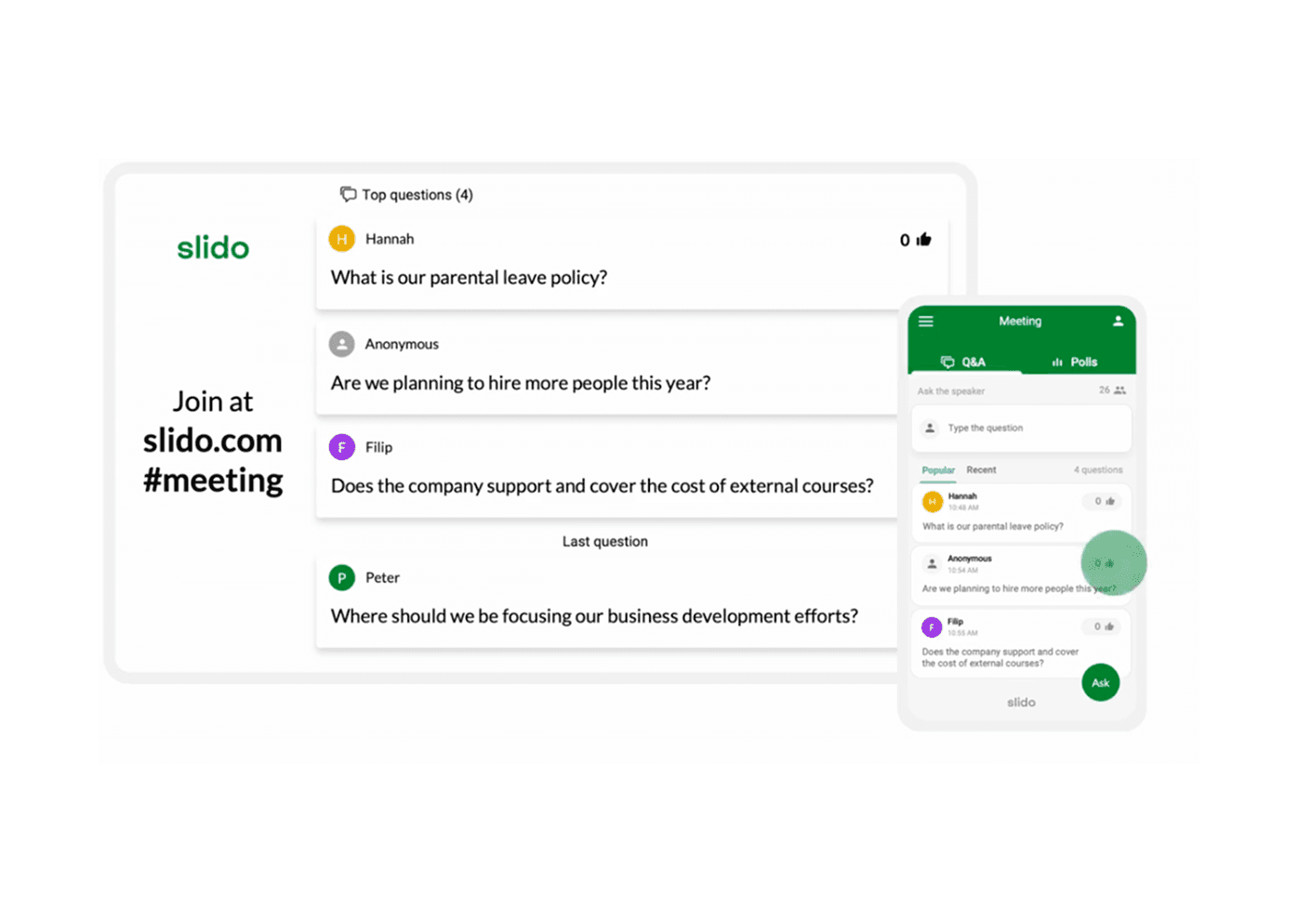
What makes it work for culture: Participation creates connection. When someone submits an anonymous question that sparks a great discussion, or votes in an icebreaker poll and sees their answer reflected on the screen, they feel like part of what's happening rather than just an observer. Over time, that accumulates into a team that feels heard.
Best for: All Hands meetings, standups, team icebreakers, onboarding sessions, and any meeting where you want more than a one-way broadcast.
Gather: A Virtual Workspace Where Your Team Actually Wants to Show Up
Here's what no one tells you about work culture: a lot of it happens between meetings. The five-minute conversation before a call officially starts. The question you ask while walking past someone's desk. The Friday afternoon energy when someone hit a big goal, and everyone’s still around celebrating.
Those moments don't exist on a Zoom grid. But they do exist in Gather.
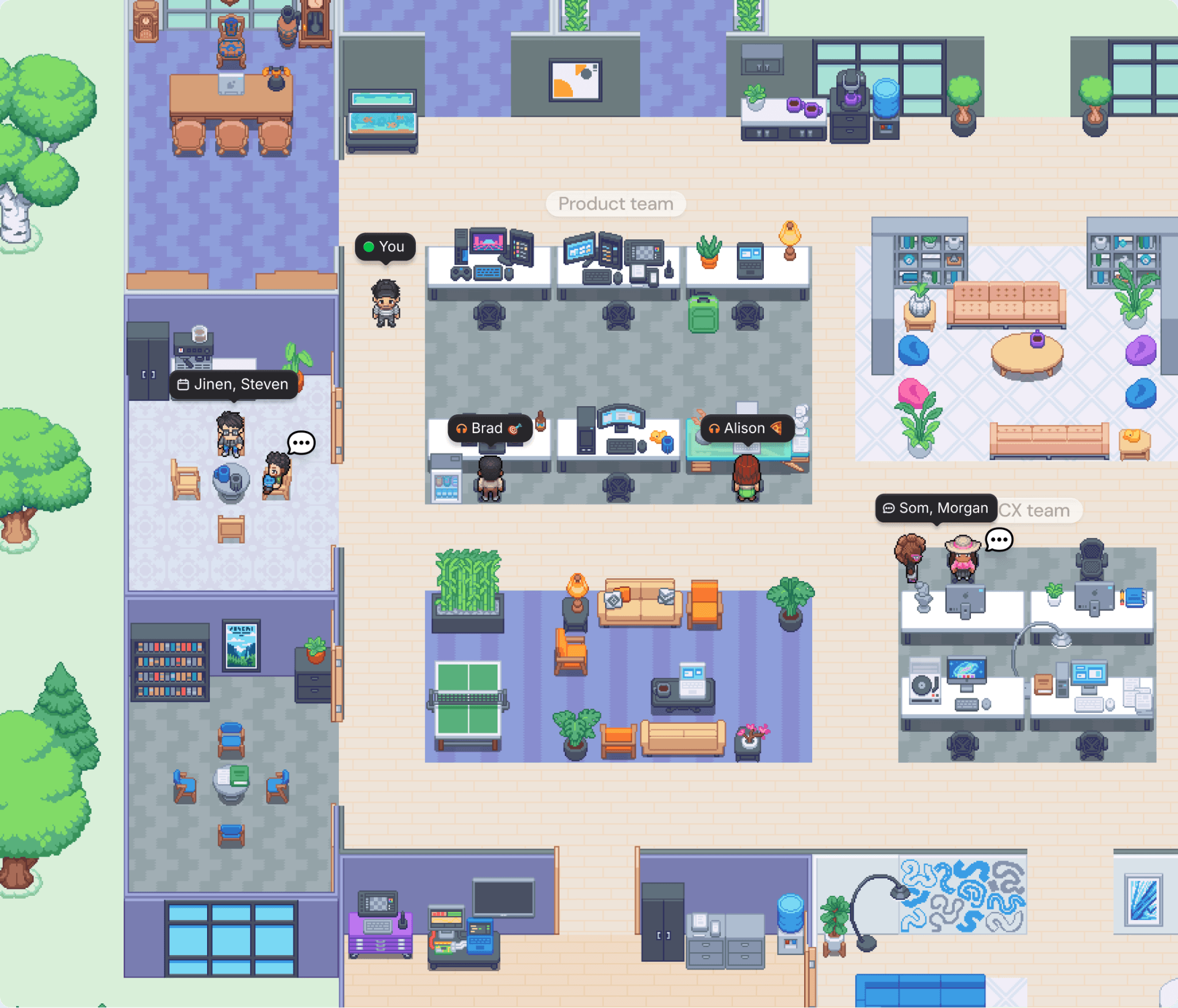
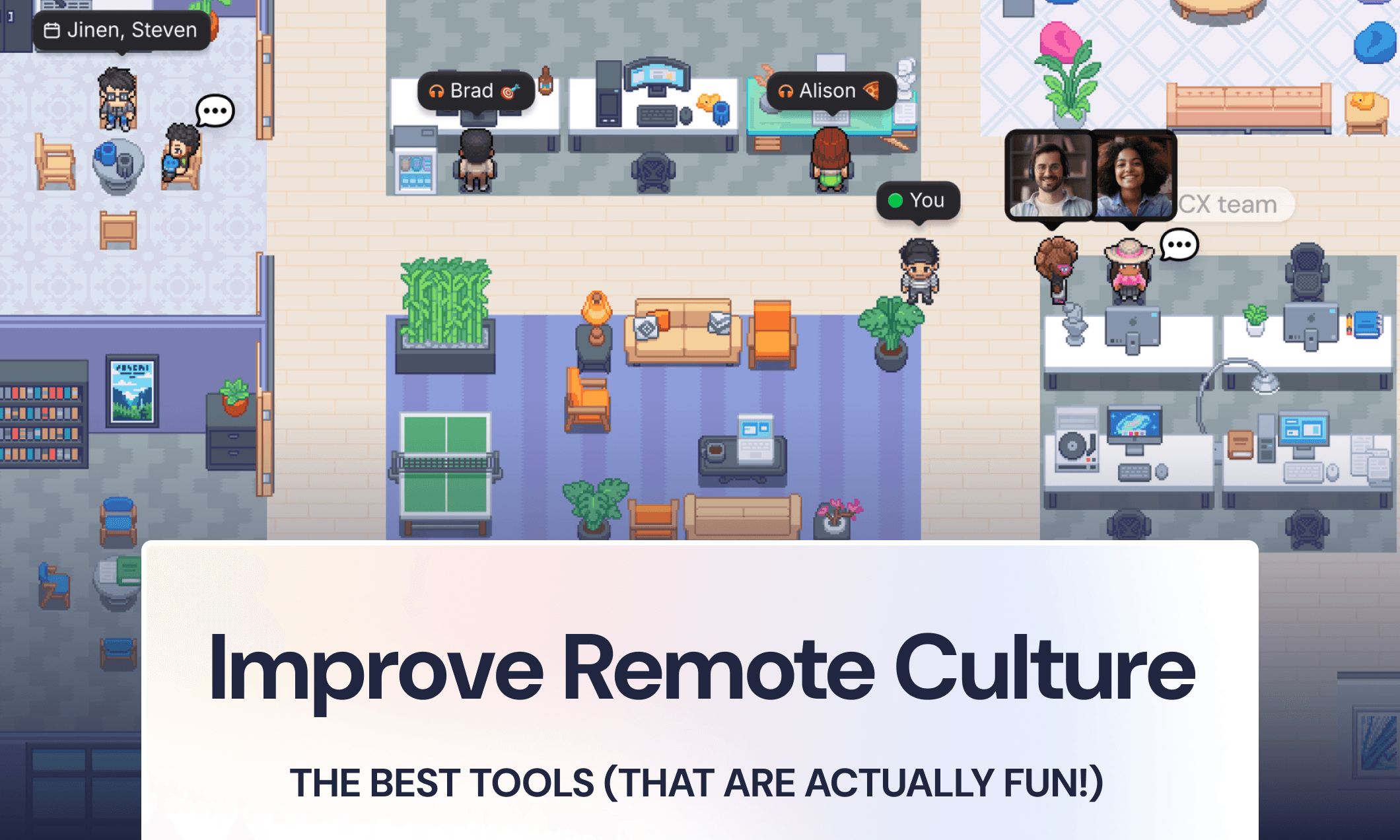
Gather gives your remote team a virtual workspace where you can meet, chat, connect, and celebrate like you’re in person. You can see your teammates' avatars, walk over to start a conversation, and have a spontaneous two-minute chat without scheduling anything. With spatial audio, you can even hear people near you, so it actually feels like an office instead of another video call.
"As a fully remote team, Gather helps us recreate the spontaneous conversations and cross-pollination of ideas that naturally occur in a physical office."
Luca Lucchese, Head of Product at Tundr
Beyond the spontaneous connections, Gather lets teams build spaces that reflect their personality. Custom office designs, themed rooms, seasonal decorations, avatar wearables.. The space feels alive in a way that a static Slack channel never can.
"Gather has helped our team culture in a massive way since we all work remotely, but it feels like we're in one office, one headspace. We're a lot more connected to each other this way, and the amount of meetings has gone down."
Kayla Goosen, Marketing Manager at mutherboard
What makes it work for culture: Gather makes remote work more human. When your team has a place to hang out, not just a tool to communicate through, work starts to feel a lot less like a series of tasks and a lot more like something you're building together.
Best for: Fully remote and or hybrid distributed teams who want their team to feel like they genuinely share a space.
Frequently Asked Questions
What are the best tools for building remote team culture?
The best tools for improving remote team culture are those that focus on connection, recognition, and collaboration. That includes Gather (for spontaneous interactions), HeyTaco (for peer recognition), Donut for Slack (for relationship building), Miro (for creative collaboration), Lattice and OfficeVibe (for employee feedback), and Slido (for meeting participation). No one tool does everything. Give them a try to find the right mix for your unique team.
How can I make remote work less lonely?
Loneliness in remote work often stems from a lack of informal connections; the low-stakes, unplanned interactions that make people feel like they belong. Tools like Donut (which creates intentional coffee chat pairings) and Gather (which gives your team a shared virtual workspace) are specifically designed to recreate that sense of ambient togetherness. Pair them with regular recognition practices, and you'll start to see a real shift.
Can remote teams actually have fun together?
Absolutely! The Gather team sure does, and we know we’re not alone. The key is to be intentional about building space for fun. That could be a HeyTaco Slack integration for regular (and silly) recognition, or a virtual office on Gather with a game room that people pop into on Friday afternoons. A fun remote culture won’t happen automatically, but once you give the team the tools and permission to build it, it tends to take on a life of its own.
How do I know if my remote team culture is struggling?
Some signals to watch for: communication that feels purely transactional, low participation in optional team events, teammates who seem to only interact with their immediate pod, and engagement survey scores trending downward. High turnover is often a lagging indicator of culture problems (especially among people who seemed happy in their roles). Tools like Officevibe and Lattice can help you catch these signals before it’s too late.
The Bottom Line
Remote work doesn't have to feel transactional. The best distributed teams aren't just productive, they're close. They celebrate each other! They look forward to the workday. They build things together that none of them could have built alone.
That’s the benefit of a remote team culture built with intention.
You don't need to implement everything on this list all at once. Choose one tool, try it for a month, and see what shifts. Then build from there. A meaningful team culture won’t develop overnight, but investing in it daily, bit by bit, will eventually create something larger that your team truly loves being part of.
Want to see what it looks like when your remote team finally has a space to call their own? Try a virtual office on Gather – free for the first 30 days!